Faction evidence guide
Guild Wars 3 Factions: Vaelwardens, Rivals, and What Is Confirmed
The official reveal gives Guild Wars 3 a frontier built around the Vaelwardens, rival guilds, nature spirits, and the older history of Orr. This guide separates named evidence from reasonable interpretation and leaves unannounced leaders, ranks, playable groups, and faction systems open.
- Named groupVaelwardens
- Conflict signalRival guilds
- SettingAncient Orr
- Full faction listNot published
What Guild Wars 3 factions are confirmed?
The safest confirmed Guild Wars 3 faction answer is the Vaelwardens. ArenaNet's reveal frames players as part of a guild connected to people living beyond the safety of towns and cities. The same material refers to rival guilds, nature spirits, and a frontier in Ancient Orr, giving the game a social and political setting without publishing a complete faction database.
Searches for Guild Wars 3 factions mix three questions: named groups, possible enemies, and permanent player allegiance. The reveal supports only the first two. Leaders, uniforms, reputation tracks, faction campaigns, PvP teams, and playable faction races are not confirmed.
The Vaelwardens are a story and world anchor first. Rival guilds signal conflict, not a finished roster. Nature spirits and Seekers add environmental and companion context; they do not automatically represent player factions. This separation avoids turning trailer imagery or familiar Guild Wars terms into invented mechanics.
This page is narrower than the Guild Wars 3 lore timeline: it follows groups and relationships on the frontier. When ArenaNet publishes names, leaders, symbols, beta quests, or faction systems, the evidence table can be updated without turning speculation into a timeline fact.
Guild Wars 3 faction evidence: names versus assumptions
Use this table as the current boundary for Guild Wars 3 faction research. A named group can be discussed as part of the setting, while a gameplay claim needs a direct official statement, a beta note, or a clearly documented system.
| Group or term | What current evidence supports | Current status |
|---|---|---|
| Vaelwardens | Players are connected to a guild working beyond established towns and cities in the Ancient Orr frontier. | Named story anchor |
| Rival guilds | The reveal points to guild relationships and competition as part of the world's social tension. | Conflict signal |
| Nature spirits | The official setting uses spirits and the natural world to frame the frontier and its dangers. | Worldbuilding term |
| Seekers | Seekers are presented as magical companions and movement partners rather than a player faction. | Companion context |
| Orr's older powers | Ancient Orr supplies religious, political, and historical context for later faction questions. | Lore context |
What are the Vaelwardens in Guild Wars 3?
The Vaelwardens are the clearest named guild in the Guild Wars 3 reveal. The name connects the player-facing story to a society operating outside the protected town-and-city pattern that readers may associate with later Guild Wars eras. It suggests a frontier order with practical responsibilities, but the public material does not yet give us a leader, hierarchy, founding date, uniform, or formal code.
The safest interpretation is that the Vaelwardens are a narrative home base for exploration and social conflict. They can explain why characters travel through dangerous territory, why they meet other guilds, and why the game can show ordinary work such as farming beside combat and traversal. That is a useful faction role even before the game reveals whether the guild has reputation, contracts, territory, or recruitable ranks.
Do not turn the name into a profession or a playable race. A character may belong to the Vaelwardens while still choosing a separate combat identity, ancestry, or build system. The existing classes and races pages should remain the owners of those questions until ArenaNet publishes exact rules.
Frontier role
The guild gives exploration a social reason: players are not only visiting Ancient Orr, they are working in it.
Community anchor
Vaelwardens can connect companions, rival guilds, and everyday settlement life without proving a formal faction menu.
Open system
Leadership, reputation, recruitment, symbols, rewards, and player choice remain unconfirmed.
Rival guilds and frontier conflict
Rival guilds are important because they give the faction question a relationship instead of a name list. A frontier story becomes more readable when groups want different things from the same land, routes, ruins, resources, or spirit relationships. The official reveal supports that broad tension, but it does not identify every rival, explain a villain hierarchy, or promise a faction-versus-faction game mode.
For now, rival guilds should be read as story opposition and world texture. They may create missions, negotiations, rescues, resource disputes, or combat encounters, yet each example is an editorial possibility rather than a confirmed feature. The same rule applies to guild battles: the presence of rival guild language does not prove WvW, ranked PvP, guild-versus-guild queues, or seasonal territory scoring.
This boundary keeps the factions page separate from the PvP guide. Competitive systems require teams, maps, objectives, matchmaking, rewards, and balance rules. If a future beta shows a reputation panel or allegiance choice, this page should document the exact interface instead of importing assumptions from Guild Wars 2.
Story opposition
Rival guilds can create conflict around goals, routes, resources, or beliefs without becoming a formal player faction system.
Resource pressure
Farming, gathering, travel, and settlement life make frontier competition plausible, but no specific economic loop is confirmed.
Social choices
Future quests may ask players to help, negotiate, or oppose groups; the reveal does not publish branching outcomes.
No automatic PvP claim
Rivalry is not proof of WvW, arenas, guild battles, ranked ladders, or faction-based matchmaking.
How Ancient Orr shapes the faction question
Ancient Orr is more than a backdrop for the Guild Wars 3 factions. It gives the groups a place where history, settlement, religion, nature, and movement can overlap. A guild working beyond city walls may need to read landscapes, cross dangerous terrain, protect people, and negotiate with powers that do not fit a simple human-versus-monster label.
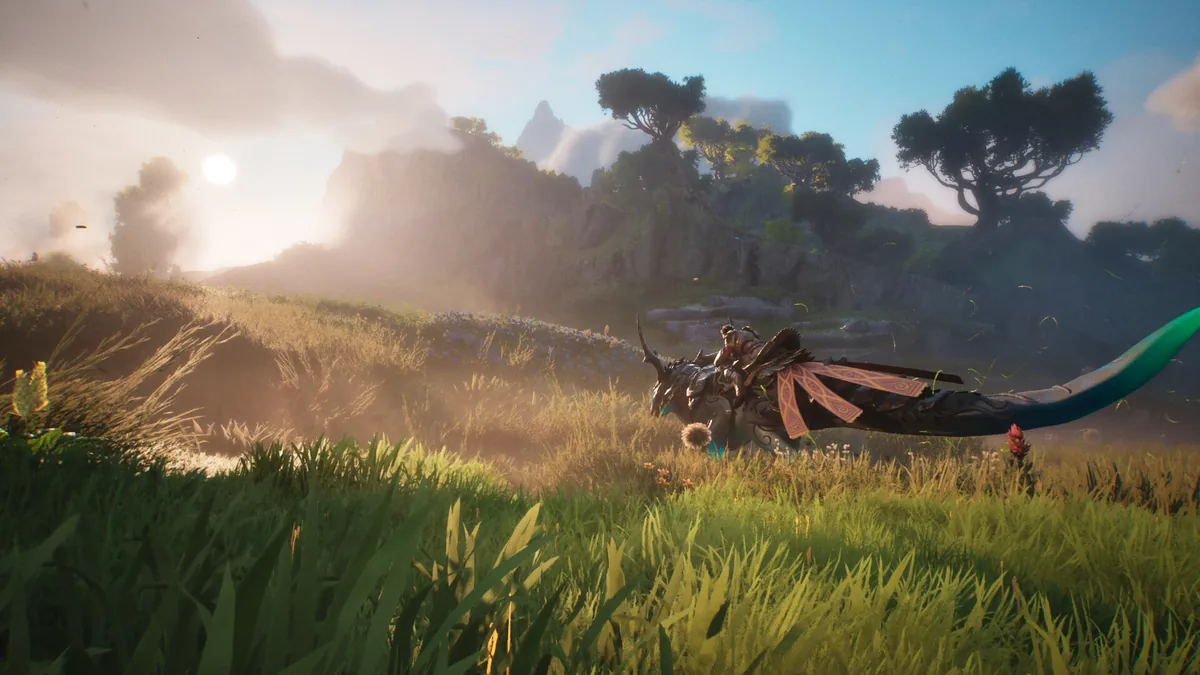
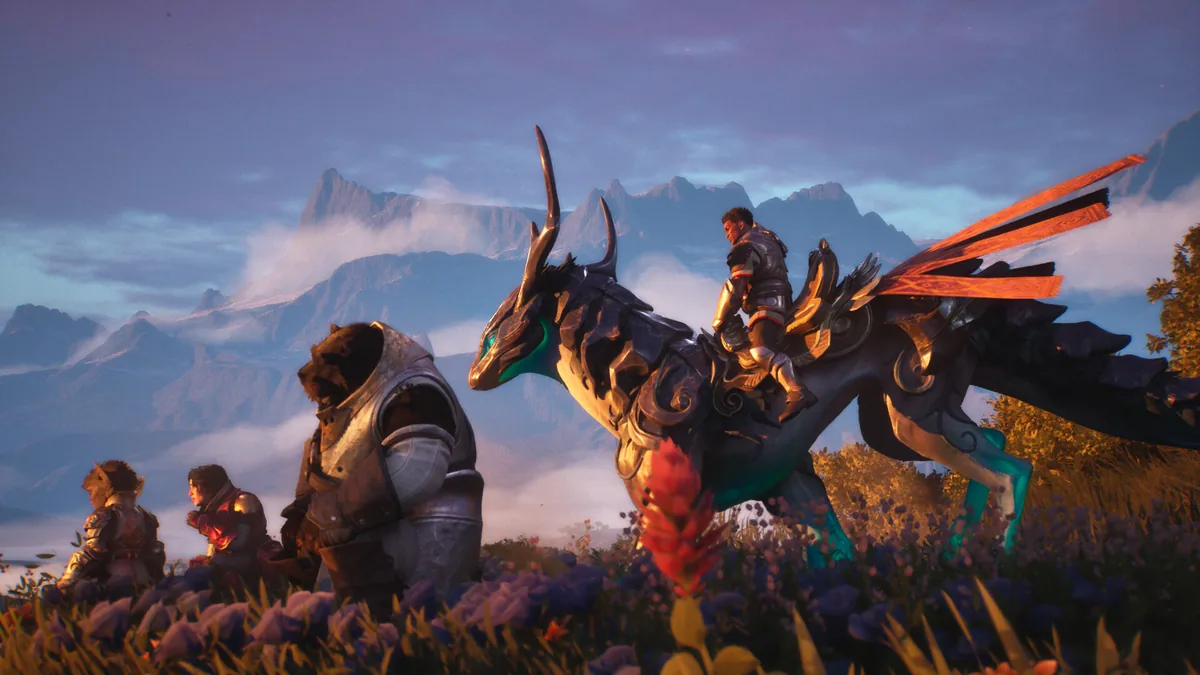
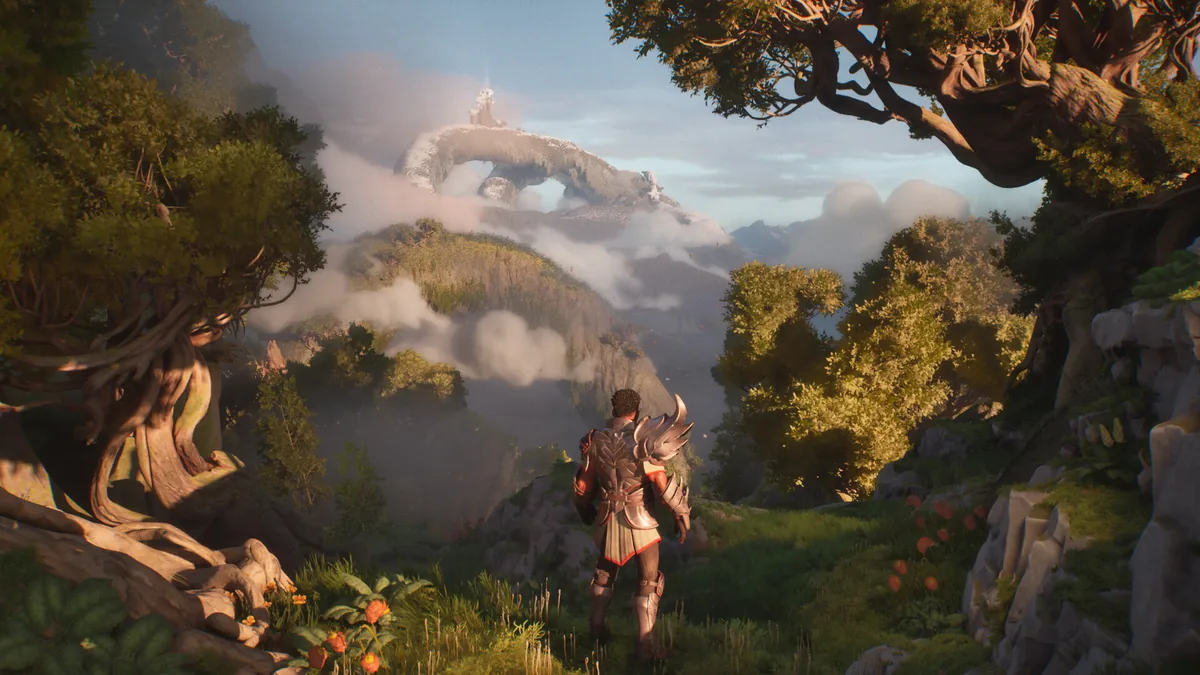
The official screenshots support a lived-in frontier: open fields, old structures, travel routes, group scenes, and natural spaces sit beside action combat. Those visuals explain why Vaelwardens and rival guilds are useful story terms. They do not identify every region, faction headquarters, enemy type, or quest chain. The image evidence is strongest when it describes tone and environment, not hidden databases.
Players coming from Guild Wars 2 should keep chronology in view. Guild Wars 3 reaches more than a thousand years before the original Guild Wars, so later institutions and political borders are context, not ready-made faction answers.
What is still unknown about Guild Wars 3 factions
These questions should stay open until ArenaNet publishes first-party descriptions, beta documentation, or direct gameplay evidence.
Leaders and ranks
No complete Vaelwarden leadership structure, rival-guild roster, rank names, or hierarchy is public.
Player allegiance
The reveal does not say whether players join the Vaelwardens, choose among guilds, or remain independent.
Reputation and rewards
Faction reputation, contracts, cosmetics, currency, territory, and rewards have not been documented.
Playable identity
A guild name does not confirm a playable race, profession, weapon, or origin.
Quest structure
Branching stories, faction campaigns, diplomacy, betrayals, and permanent outcomes remain unknown.
Competitive modes
Rival guild wording does not confirm WvW, arenas, guild queues, or ranked battles.
Full faction list
Other guilds, cities, spirits, orders, and political powers may appear later, but should not be invented.
Official sources used for this faction guide
First-party sources support the names and broad world context; interpretation stays labeled, and unsourced faction lists are not confirmations.
- Guild Wars 3 official announcement - Primary reveal for Ancient Orr, the Vaelwardens, rival guild context, companions, and frontier life.
- Guild Wars 3 official website - First-party hub for future updates and official source checks.
- Our Guild Wars Philosophy - Useful boundary against assuming every earlier Guild Wars system returns unchanged.
- Guild Wars 3 official Steam listing - Platform context only; a store page is not a faction rules document.
FAQ